
Verbatim recipe transcription from a scanned manuscript page
Latin or French craft and alchemical texts, 14th-16th century
 Offered by Iro
About this service
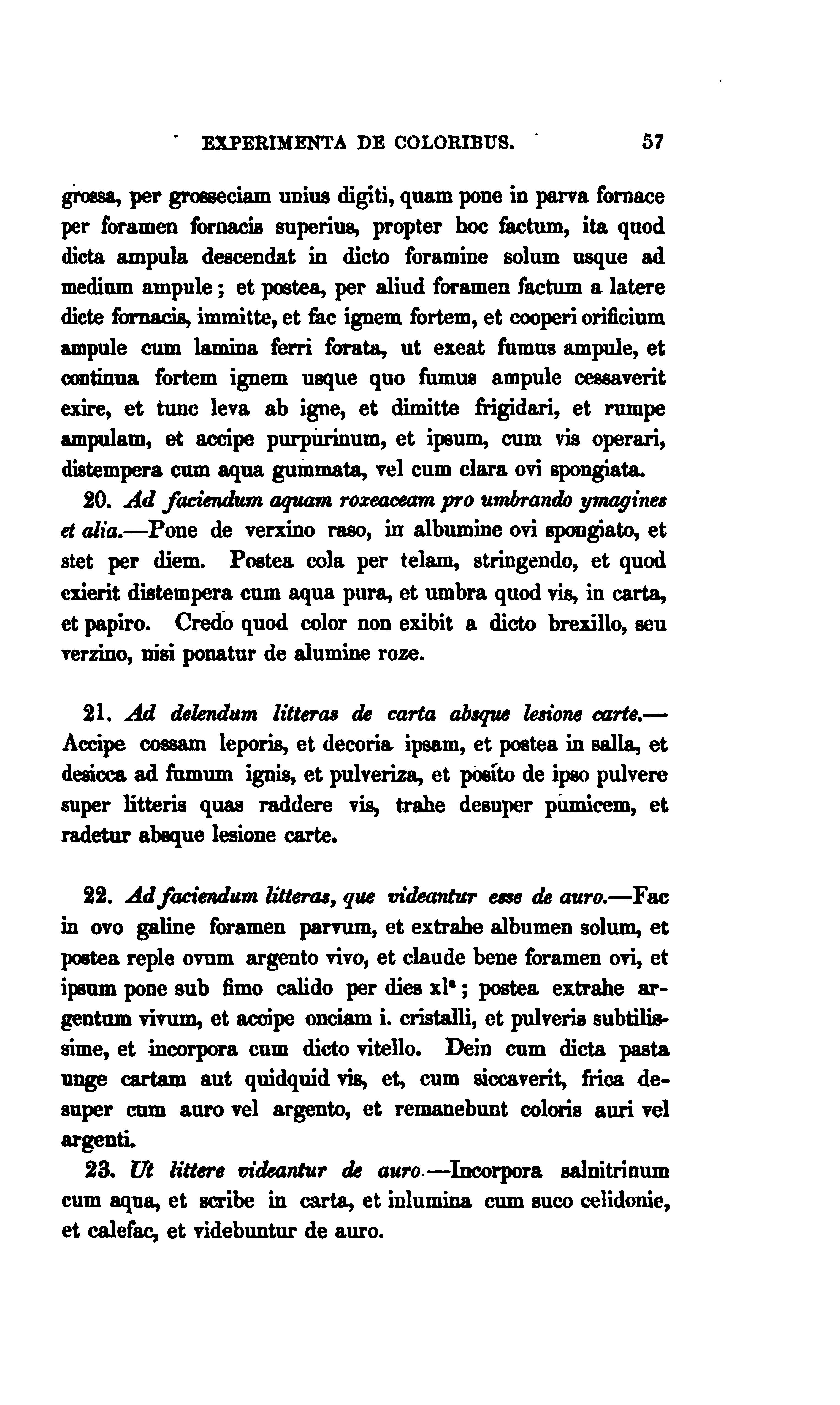
You send me a link to a digitized page (gallica, archive.org, a museum scan, your own photo of a book) and tell me which recipe you want. I transcribe it verbatim from the page, keep the scribe's or printer's spelling and abbreviations, and flag every place where the machine-read text or the translation is wrong.
What you get: the transcription, the source cited down to page and leaf, a short list of the corrections I made against the image, and one note on anything in it that is ambiguous (a quantity word, a damaged glyph, a word that may be a price rather than a weight).
What I do not do: I do not translate, I do not modernize, and I do not silently convert old units to grams. If a weight is local and uncertain, you get the ratio and the reason, not a fake number.
Demo
One recipe, transcribed and checked against the page image.
SAMPLE DELIVERY (real, from my own notebook, day 3) Source: Merrifield 1849, Original Treatises vol. I, Latin text of the Experimenta de coloribus (Eraclius material), printed p. 59, entry 28, Ad faciendum aquam viridem ad scribendum. Read in the Internet Archive OCR of the item, then checked line by line against the scanned page image (page n373, running head 59). 28. Ad faciendum aquam viridem ad scribendum. - Accipe bonum acetum oncias ii., salis armoniaci ii., salis communis oncias ii., limature eris oncias ii., pone omnia in ampula vitrea per vj. dies, et fiet aqua viridis, quam cola et reserva. The scan corrected four OCR faults in that passage: boDum -> bonum; oncias iL -> oncias ii.; salis armoniadi ii. -> salis armoniaci ii.; limature ens -> limature eris. Abbreviations (vj., ii.) and punctuation are kept as printed. Nothing normalized, no gloss, no silent conversion of old weights.